
Hartford, CT · Garage Door Service
Garage Door Installation Built for Hartford's Older Housing Stock
New garage door installation in Hartford, CT, built for the 1938-1986 housing stock and the cold winters that come with sitting this far inland in New England.
- Repairs & new doors
- Springs & openers
- Serving 6 nearby communities
How Long You Are Without the Door
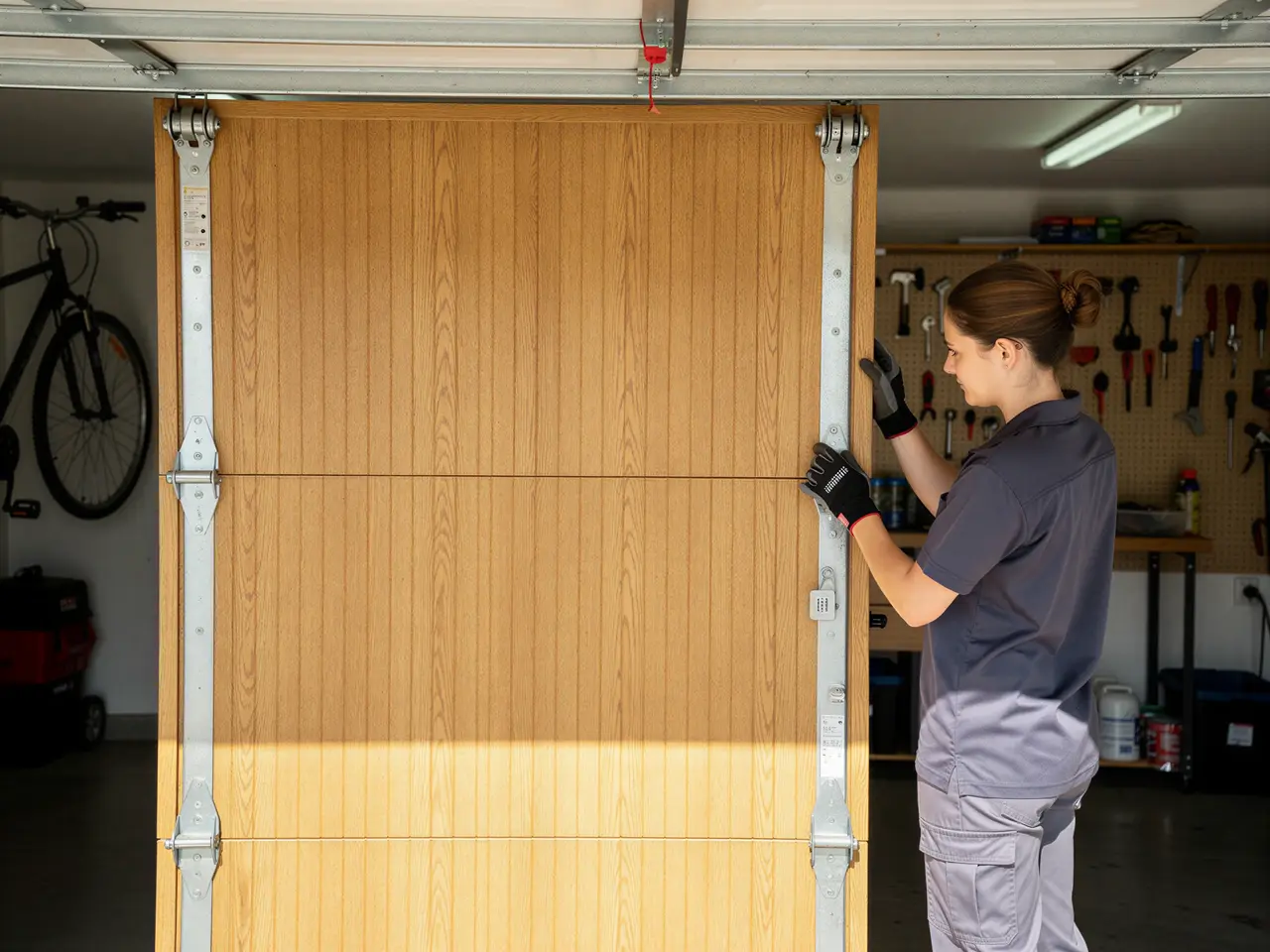
A straightforward swap on a standard opening doesn't take long once the new door is on site. What stretches a job out in Hartford is the opening itself. Houses here were mostly built between 1938 and 1986, with the median landing around 1972, and a lot of those openings were framed to whatever lumber and hardware was common that decade - not to a modern standard size. If the jambs are out of square or the header needs reinforcing before a new door and track go in, that's extra time on site, not a defect in the door. We also don't rush insulation and weatherseal work in genuinely cold weather; adhesives and foam need the right temperature to set properly, and this region sits in a cold-severe climate band. We'd rather schedule around a cold snap than hand you a seal that fails by February. If your opening is standard and square, expect a same-day install. If it needs framing work, we'll tell you that up front before we start, not after.
Can You Do This Yourself
Hanging a garage door yourself is possible in theory and a bad idea in practice, mostly because of the torsion spring, not the panels. A wound torsion spring under tension can break a hand or worse if you don't know the setup, and that risk doesn't change because the house is old or new. Where Hartford's housing stock makes it harder: openings from the 1960s and 70s were often built a half-inch or more off true, and a door that isn't shimmed and plumbed correctly in a crooked opening will bind on the track within months, not years. You also need a door rated for a cold-severe climate - a cheap non-insulated panel will warp and gap at the seams after a few winters of temperature swings between a heated garage and single-digit air outside. If you're set on doing it yourself, at minimum have someone qualified check the spring tension and the frame squareness before you trust the door to open and close on its own. That's not a sales line - it's the part that actually gets people hurt.
Why It Happens Here
Hartford's housing stock skews old. Median build year across the area sits around 1972, with most homes going up between 1938 and 1986, and the bulk of that falls into 1960s and 70s construction spread across the 67 named neighborhoods and nearby towns in this service area. A door installed when the house was built, or even a replacement from twenty years ago, is well past the point where parts are easy to source - torsion drums, specific track widths, and hardware patterns change over the decades, and old stock doesn't always match new. Add the climate: this area sits in a cold-severe band, and a door that was fine for milder decades starts showing real wear once freeze-thaw cycling works on old seals and panel seams every winter. Income levels here (median household income $107,494, F7) also mean more owners are choosing full replacement with a properly insulated door over patching an old one repeatedly - it's often the better math once a door is original to a 1960s or 70s build.
How It Shows Up
The giveaway isn't always a door that won't open. More often it's a steel door with no insulation layer, something common on homes built before insulated doors were standard, which in this area usually means anything close to the 1938-1986 build range. You'll notice it as a cold garage wall, frost on the inside of the panels, or a door that feels noticeably heavier to lift in January than in July because the steel itself is contracting. On 1960s and 70s builds specifically, we also see openings that were framed slightly out of square from the start - a new door on old track in that kind of opening will rub on one side or need extra force to seat the bottom panel. If your current door is single-layer steel, rattles in wind, or has visible daylight at the corners, that's not a repair problem, that's a replacement conversation, and in a cold-severe climate it's worth having sooner than later.
Frequently asked questions
How do I know if my opening needs reframing before a new door goes in?
If your house was built in the 1960s or 70s, which covers a lot of homes in this area, there's a real chance the opening isn't perfectly square. We check plumb and level on the jambs during the estimate, before ordering the door, so you know ahead of time if framing work is part of the job.
Do I need an insulated door in Hartford?
Given this area's cold-severe climate band, yes, if the garage is attached or you use the space year-round. A non-insulated single-layer door will transfer cold directly into an attached wall and tends to warp faster through repeated freeze-thaw cycles than an insulated panel does.
Can you install a door on an older, non-standard opening?
Usually, yes. Homes built between 1938 and 1986 sometimes have openings framed to measurements that don't match today's standard door sizes. We can often adapt the frame or order a custom-width door; we'll tell you which approach fits your opening during the estimate.
What's the one thing you won't do on an install?
We won't seal or foam-insulate a door in extreme cold, because the adhesive and foam won't cure properly and the seal fails early. If a cold snap hits mid-install, we'll finish the weatherproofing once temperatures allow it, rather than hand you a seal we already know won't hold.
Book garage door service in Hartford
Call now or request a quote - tell us what the door is doing and where you are.