Hartford, CT · Garage Door Service
When the Power Goes Out, Does Your Opener Still Let You In
Hartford's housing stock dates mostly to 1960-1986, and severe cold winters strain openers during outages. Here's what that combination means for your door.
- Repairs & new doors
- Springs & openers
- Serving 6 nearby communities
Where People Go Wrong
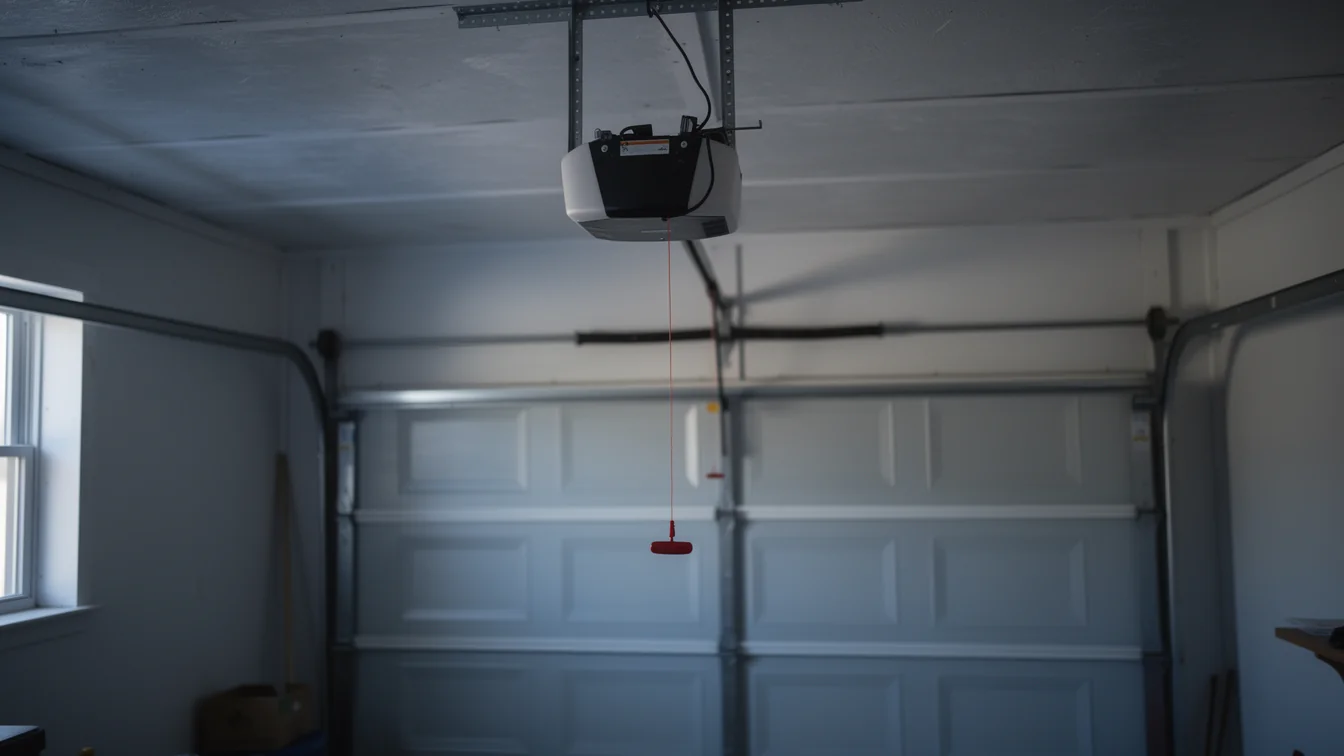
Most owners never touch the opener's emergency release until the power is already out and they're standing in a cold garage trying to find the red cord in the dark. In Hartford, where the housing stock mostly went up between 1938 and 1986 with a median build year of 1972, that's a real problem, because a lot of these openers are originals or first replacements from decades back, installed before battery backup was standard equipment. People assume their opener will just work again once the lights come back. Sometimes it does. Sometimes the logic board that held up fine in a mild October outage doesn't recover from a hard winter one, and now you've got a door that won't respond at all, power or no power. The other mistake is treating the manual release like a last resort instead of something you practice. If you've never pulled it with the door down and watched what happens, you don't actually know whether your door will lower smoothly by hand or drop fast because a spring is already tired. That's not something you want to learn during a blackout.
How Local Conditions Play In
Hartford sits in a severe cold climate band, and the outages that matter here aren't the quick summer flickers - they're the multi-hour ones that come with ice and heavy wet snow loading on lines. Cold does two things to an opener at the same time: it stiffens the grease in the drive mechanism, and it's harder on aging circuit boards that are already running near the end of their service life. A house built in the 1960s or 70s that still has its second-generation opener is carrying 45-plus year old wiring runs to the garage in some cases, and that wiring wasn't sized with a battery-backup unit in mind. When the power outages during a January storm, you're not just dealing with no opener - you're dealing with a cold garage, a door that may be iced at the bottom seal, and springs that are stiffer than they were in July. Any one of those is manageable alone. Together, on a dark driveway at 6 a.m., they're why most of our outage calls come in clusters right after a storm, not during it.
The Situation
If your opener was installed before battery backup became common, losing power means losing automatic operation, full stop - the door isn't broken, it just has no way to move without the chain drive, screw drive, or belt getting power from somewhere. The manual release disconnects the carriage from the opener so you can lift the door by hand. That's fine on a door with springs in good shape. It's not fine on a door with a spring that's already weakened, because now you're muscling the full deadweight of a panel built to the heavier standards of the Hartford housing era - older doors in this area tend to run heavier than the lighter modern steel sold today. We don't carry every opener model or every control board on the truck, and for some of the oldest units, a board is genuinely a special-order part. That's the honest limit: if yours is one of those, we'll tell you upfront rather than have you wait on a part that isn't coming fast.
Checking It Yourself
Find the emergency release cord - usually red, hanging near the opener head - and trace it to where it connects on the carriage. With the door fully closed, pull it once and see if the door lowers under control or drops. Controlled is normal. A fast drop means a spring issue, not an opener issue, and that's worth a call regardless of power status. Next, check whether your opener has a small battery pack mounted on or near the motor head - that's the giveaway for backup capability. If there's none and your home fits the common Hartford build window of the 1960s through 1980s, assume you have no backup and plan around it: keep a flashlight by the garage door, and know that during an extended outage you'll be opening that door by hand. None of this is a sign your door is failing. It's just what an older opener, in a climate that throws real winter at it, actually needs from you when the grid goes down.
Frequently asked questions
Does my opener need battery backup in Hartford specifically?
It's worth having given how often winter storms here knock out power for hours, not minutes. Houses built in the common local era (1938-1986) often have openers without it. It's not mandatory, but in a severe cold climate zone, losing automatic operation during an ice storm is more than an inconvenience - it's a door you're lifting by hand in freezing weather.
Why did my opener die during a power outage and not come back?
Sometimes the outage itself didn't kill it - cold already had the board running marginal, and the power cycle was the final push. This shows up more on older units that have been through many winters. We'd need to look at the board itself to confirm; not every failure is outage-related.
Is the manual release safe to use on an old door?
It's safe if the springs are in decent shape. If the door drops fast instead of lowering under control when you test the release, that's a spring problem, and you shouldn't keep using manual release until it's checked - the door's full weight is no longer balanced.
Related garage door services in Hartford
More garage door guides
Book garage door service in Hartford
Call now or request a quote - tell us what the door is doing and where you are.