Hartford, CT · Garage Door Service
Garage Door Opener Repair, Hartford CT
Opener repair for Hartford, CT homes built between 1938 and 1986, where cold winters and aging circuit boards cause the most opener failures each year.
- Repairs & new doors
- Springs & openers
- Serving 6 nearby communities
How Long You Are Without the Door
How long your door sits dead depends on what actually failed. If it's a safety sensor knocked out of alignment or a dead remote battery, that's a same-visit fix. If the logic board on the opener has fried, or the motor has seized, we have to source a replacement board or unit, and that can push the job out if the model is an older one no longer stocked locally.
Across the 386,561 households in this service area, 192,067 are owner-occupied houses - a lot of original openers still running on 1970s hardware. Chain-drive openers from that era used board designs that got discontinued decades ago, so when the board goes, we're often matching a universal replacement rather than dropping in the exact part. That adds time versus a 2015 belt-drive unit where boards are common stock.
We won't tell you a repair will take a set number of hours before we've opened the housing and looked at the board. What we can tell you is that a dead opener rarely means a dead door - the door itself, springs and tracks included, is usually fine, and that's the part that actually matters for getting the car out.
Can You Do This Yourself
Some of this is within reach. Check the wall switch is getting power, check the breaker hasn't tripped, and look at the two safety sensors near the floor on each side of the track - a stray box, a cobweb, or sensor eyes knocked out of alignment will stop the opener cold and throw a blinking light code. Wipe the lenses, nudge them square, and try again before calling anyone.
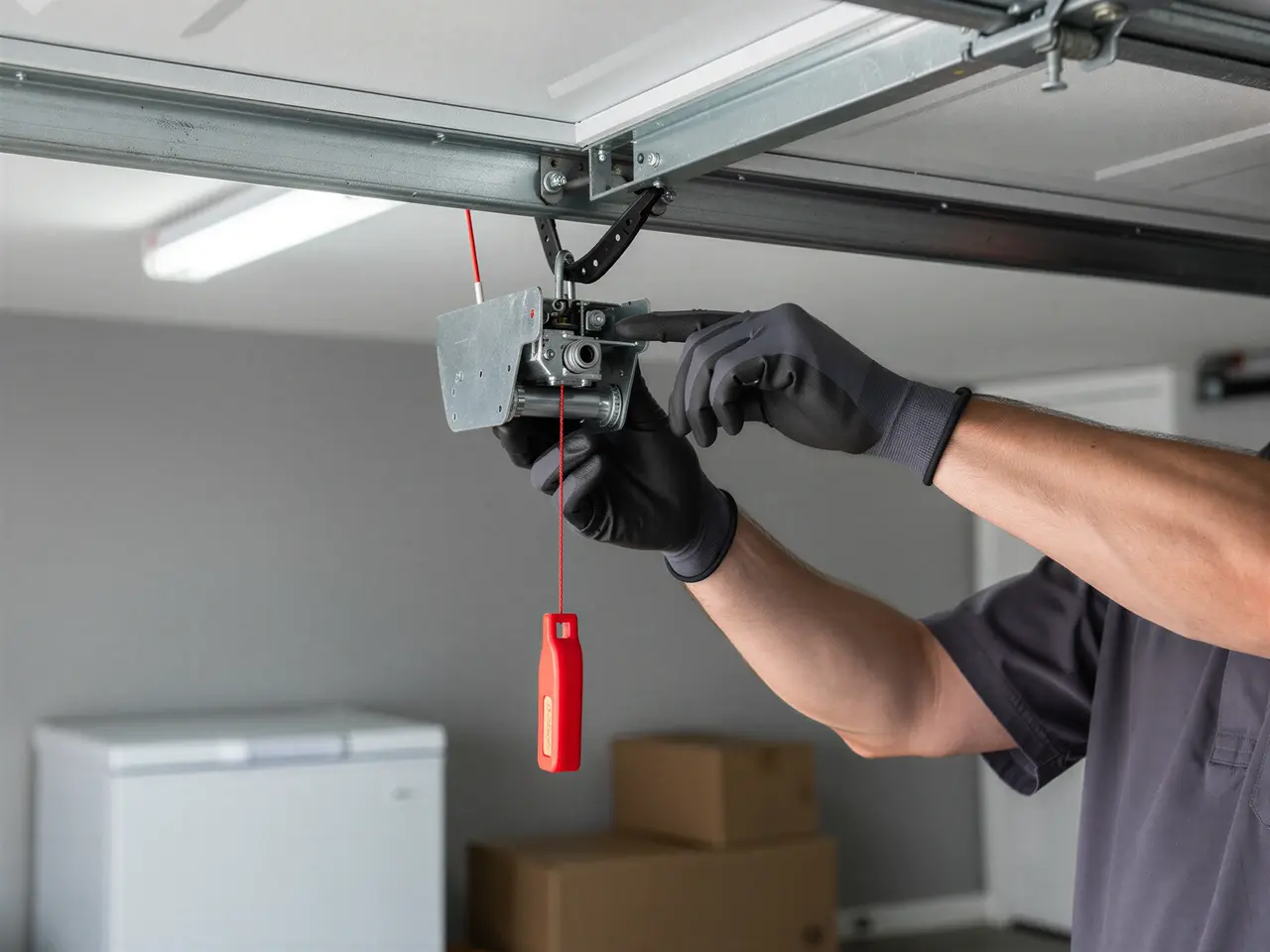
Past that, we'd rather you didn't. Opening the opener housing to test a circuit board means working near a live motor and a wound spring system on the door itself, and testing logic boards without the right meter just burns a part that was maybe fine. If the opener runs but the door doesn't move, that's usually a stripped drive gear inside the housing - a part swap, not a lubricant job, and not something to chase with WD-40 and hope.
Honest limitation: if the motor windings are shot or the board has visible scorch marks from a power surge, we don't rebuild those. Past that point, replacement is the straight answer, and we'll say so rather than bill you for a repair that won't hold.
Why It Happens Here
Housing in Hartford's service area was mostly built between 1938 and 1986, with a median build year of 1972, and the bulk of it falls into that 1960s-70s stretch across the 67 named areas here. Openers installed then, or replaced once already in the decades since, are built on mechanical and electrical designs that predate the surge protection and sealed-board housings that newer units ship with.
Hartford sits in a cold-severe climate band, and that cold is hard on opener circuit boards and chain lubricant alike. Cold mornings thicken chain lube, which makes the motor work harder to pull the door, and repeated freeze-thaw cycling is rough on solder joints inside older boards - microcracks that show up as intermittent failures long before the board dies outright. A unit that worked fine in August can start skipping commands in January as temperatures swing.
With a median household income of $107,494 across the area, most owners here replace a dead logic board rather than nurse along a 1970s chain-drive unit - parts for those are scarce enough that swapping the operator head makes more sense than hunting a thirty-year-old board.
How It Shows Up
The most common complaint we hear is the opener running - motor hums, light comes on - but the door doesn't move, which usually points to a stripped internal gear rather than anything electrical. Close behind that is a door that reverses halfway up or down on its own, which is often the safety sensors reacting to cold-weather condensation on the lenses rather than a real obstruction.
Blinking lights on the opener head are the unit's way of throwing an error code, and on older models from the 1970s-80s stock common in this area, that code system is more limited than on newer units, so it often just blinks without telling you much beyond
Frequently asked questions
Why does my garage door opener stop responding on cold mornings?
Cold thickens the lubricant on the chain or screw drive and makes solder joints on older circuit boards more likely to crack intermittently. In Hartford's cold-severe climate, that shows up as an opener that worked fine the night before and won't respond at 20 degrees the next morning.
Is it worth repairing a 1970s opener or should I replace it?
If the motor or board has failed outright, replacement is usually the honest call since parts for operators that old are hard to find. If it's a sensor, gear, or switch issue, repair makes sense and we'll say so rather than push a new unit you don't need.
Can I fix a misaligned safety sensor myself?
Yes. Check both sensor eyes near the floor on each side of the track, wipe the lenses, and make sure nothing is blocking the beam between them. That's the single most common cause of an opener that won't close the door, and it costs nothing to check yourself.
Do you work on openers in towns near Hartford too?
We cover the wider service area around Hartford, including towns like West Hartford, East Hartford, and Wethersfield a few miles out, where the same 1960s-70s housing stock and opener age are common.
Related services
Related guides
By Neighborhood
Opener Repair across the Hartford area
We also handle opener repair in these Hartford-area suburbs.
Book garage door service in Hartford
Call now or request a quote - tell us what the door is doing and where you are.