Hartford, CT · Garage Door Service
What to Expect When You Replace a Garage Door in Hartford
Most Hartford houses date to the 1960s and 70s, with original doors built for narrower openings and less insulation. What to check before you replace yours.
- Repairs & new doors
- Springs & openers
- Serving 6 nearby communities
Where People Go Wrong
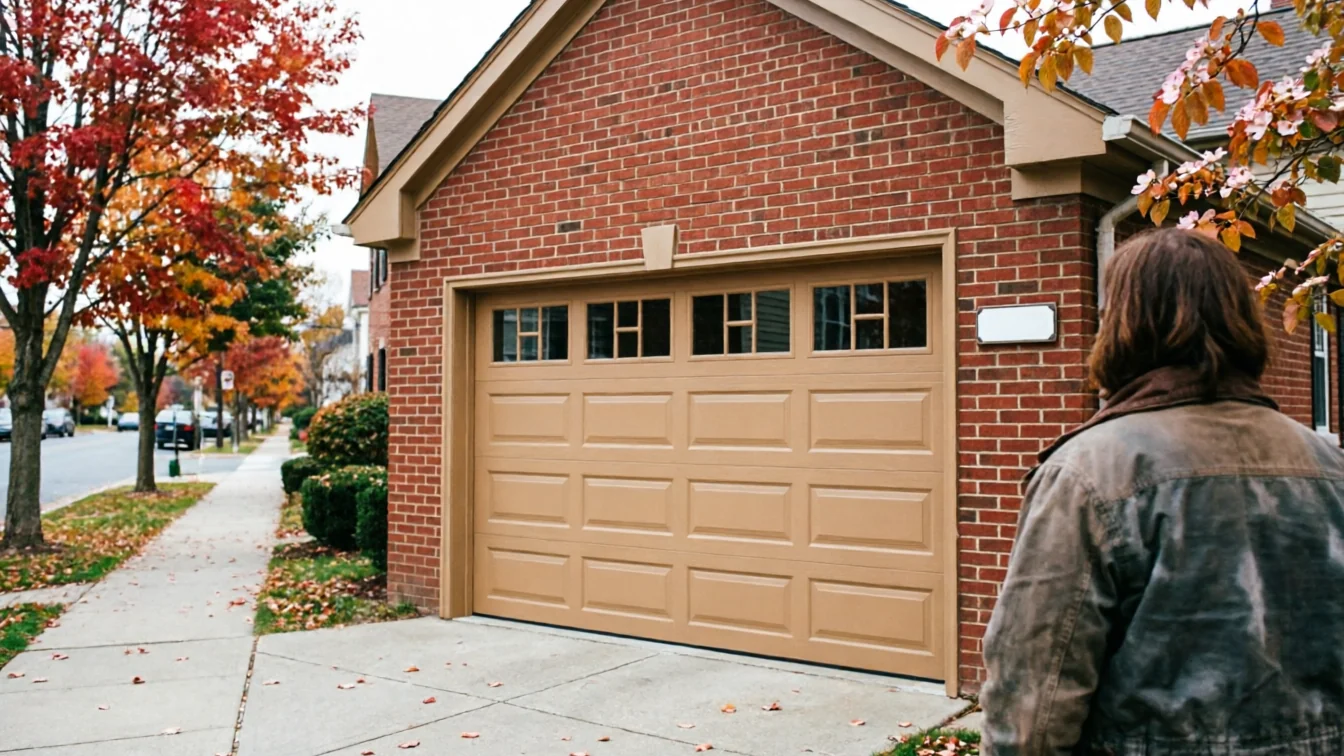
The most common mistake we see is someone measuring the opening they have now and assuming any door in that size will work the same way the old one did. Most of the houses across this service area went up between 1938 and 1986, with the bulk of the stock dating to the 1960s and 70s, which means the original opening is often narrower than what current doors are built to fill, and the track hardware behind the drywall doesn't match what a new door expects. People order online, get a door that's technically the right width and height, and then find out the jamb returns are too shallow or the headroom won't clear a standard torsion setup.
The second mistake is treating insulation as optional because the old door never had any. A single-layer steel door was normal when these houses were framed, and it did the job for decades, but it was never rated for the kind of cold this area actually sees. Swapping one thin door for another thin door because it's cheaper up front just repeats the same problem for another thirty years. If you're replacing anyway, it's worth doing it once with a door built for the climate you're actually in, not the climate the house was built in.
How Local Conditions Play In
This area sits in a cold climate band with severe winter conditions, so a door that isn't rated for that kind of temperature swing will warp or bind at the seams within a few winters. Steel contracts in the cold, and a thin, uninsulated panel moves more than a laminated or polyurethane-backed one. That movement is what you feel as a door that used to close flush suddenly leaving a gap at the bottom corner once the temperature drops.
Cold also changes how springs and openers behave. Torsion springs lose a little tension as metal contracts, and openers draw more current fighting a heavier, colder door. None of this means you need the most expensive door on the lot. It means the R-value and the seal quality matter more here than they would somewhere with milder winters, and it's worth asking what the door is actually rated for before you buy, not just what it looks like in a showroom.
The Situation
Across the 67 named areas that make up this service territory, from Downtown out to West Hartford, East Hartford, Wethersfield, and as far as Simsbury and Canton, you'll find houses sharing that same 1960s-70s build era, which is why the old single-layer steel door shows up so often no matter which side of the map you're on. With 192,067 owner-occupied houses spread across 386,561 households in this area, most of what's out there to replace is original or close to it, not a door that's already been swapped once.
The median household income here is $107,494, which puts most owners in range of an insulated steel door with a better R-value, not just the cheapest stock panel available. That doesn't mean everyone needs the top-tier option, but it does mean budget usually isn't the hard constraint it would be elsewhere. The harder constraint is usually the opening itself: older framing, older track positions, and headroom that wasn't built with modern torsion hardware in mind.
Checking It Yourself
Before you call anyone, measure three things: the width and height of the opening, the headroom above it, and the backroom depth behind it. On a house from the 1960s or 70s, headroom is the one that trips people up most, since a lot of these openings were framed before standard torsion springs became common, and there may not be room for a spring above the track the way newer doors expect.
Look at the panel seams on your current door too. If they're riveted rather than hinged, or if there's no visible insulation when you look at the back of the door, you're dealing with original stock from that same build era, and a direct swap won't automatically work without some adjustment to the track or jamb.
One honest limitation: we don't carry every insulated panel style or custom color on the truck. Odd-sized openings common in these older homes, or anything outside standard stock sizing, usually has to be special ordered, which takes longer than a same-week install.
Frequently asked questions
Will a new door fit my old opening without changes?
Usually close, but not guaranteed. Houses from the 1960s-70s era common across this area were often framed before modern torsion hardware became standard, so headroom and backroom can be tighter than a new door needs. Measure headroom above the opening before you order anything, since that's the dimension most likely to force a track adjustment.
Do I really need an insulated door in this area?
Given the cold, severe winter conditions this area sits in, an insulated door holds its shape and seal better than a single-layer steel panel, which is what most original doors from the 1960s-70s build era were. It's not required, but an uninsulated door will show gaps and drafts sooner here than in a milder climate.
How long does a replacement take if it's not a stock size?
We don't keep every size or finish on the truck. Openings that fall outside standard stock dimensions, which shows up often in older homes across this area, usually need a special order, and that takes longer than our regular install timeline.
Is a mid-range insulated door enough for most houses here?
For most owners, yes. With a median household income of $107,494 across this service area, a mid-tier insulated steel door with a reasonable R-value fits most budgets without reaching for the top-tier option, which is usually built for conditions more extreme than this climate band requires.
Related garage door services in Hartford
More garage door guides
Book garage door service in Hartford
Call now or request a quote - tell us what the door is doing and where you are.