
Hartford, CT · Garage Door Service
Why Safety Sensors Keep Drifting Out of Alignment in Hartford
Hartford's 1938-1986 housing stock and severe cold winters both push garage door safety sensors out of alignment. Here's where owners go wrong and how to check it.
- Repairs & new doors
- Springs & openers
- Serving 6 nearby communities
Where People Go Wrong
The most common mistake we see is treating the sensors as a one-time install instead of something that needs a recheck every season. A lot of Hartford's housing went up between 1938 and 1986, with the median sitting around 1972 - which means the garage itself predates the 1993 federal rule requiring photo-eye sensors on new openers. In practice, that means plenty of these garages had sensors added later, bolted onto door tracks and framing that were never built with a sensor bracket in mind. The bracket gets screwed into whatever wood or metal was closest, often at a slight angle, and nobody notices until the door starts reversing for no clear reason.
The second mistake is assuming a sensor that lights up steady is aligned. A steady LED tells you the beam is connecting right now, not that the bracket hasn't crept half a degree since last winter. Owners also tend to clean the lenses and stop there, which helps with dust but does nothing for a bracket that's shifted. We also see people aim the sensors by eye without a level, which gets you close enough to work most of the time - until it doesn't, usually on the coldest morning of the year.
How Local Conditions Play In
This area sits in a severe cold climate band, and that matters more for sensors than most people expect. The brackets are usually mounted low, close to the slab, and that's exactly where seasonal frost heave does its work - the ground under and around a garage floor moves as it freezes and thaws, and even a slab that looks flat can shift enough over a winter to tip a bracket out of true. On houses from the 1938-1986 era, the wood jambs sensors are often screwed to have had fifty-plus years of swelling and shrinking with the seasons, which loosens the screws holding the bracket just enough for it to creep.
Temperature swings also change the metal track itself. Steel contracts in deep cold, and on an older track that's slightly bowed or worn, that contraction can nudge the beam path by the fraction of an inch it takes to lose connection. None of this is dramatic - it's not a storm knocking something loose. It's small, repeated seasonal movement, which is why sensor trouble tends to show up as the weather turns rather than all at once.
The Situation
When a sensor beam is even slightly broken, the opener won't close the door at all, or it'll start down and reverse immediately - both read to most owners as 'the opener is broken' when the opener itself is usually fine. Across the houses we see in this area, most of this traces back to one of two things: a bracket that's physically shifted, or a lens that's dirty or fogged enough to scatter the beam. Direct sun hitting one sensor in the late afternoon can also wash out the receiver, which some owners mistake for a wiring fault.
We won't pretend every case is a five-minute fix. If the bracket itself has cracked, or the wiring has been chewed through or nicked during a past repair, that's a part swap, not a realignment. And if the door is old enough that the sensors were a later add-on wired into a mismatched opener, sometimes the cleanest fix is replacing the whole sensor pair rather than chasing a flaky connection on parts that don't quite match anymore.
Checking It Yourself
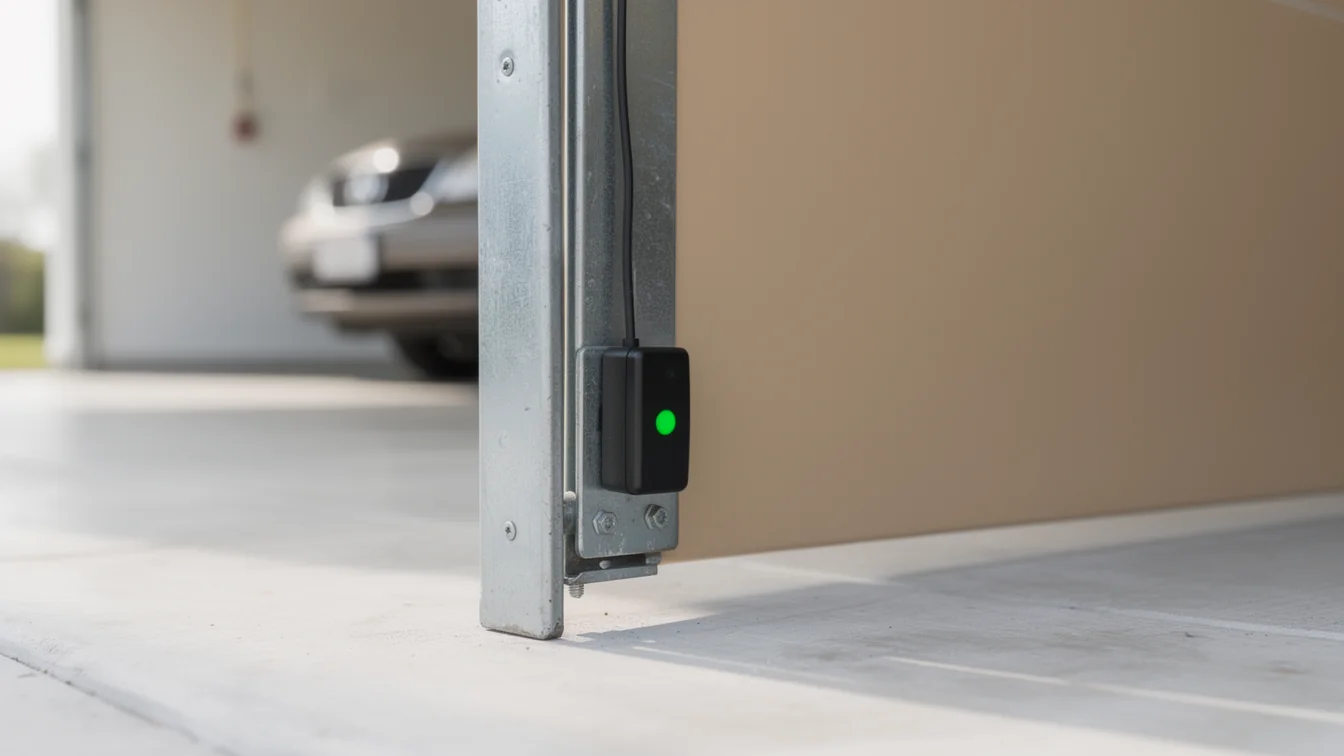
Start by looking at the two sensors low on either side of the track, a few inches off the floor. Each should have a small LED - one solid, one usually blinking or solid depending on the brand - and both should be pointed at each other, not at the floor or the ceiling. If one looks tilted compared to the other, loosen the wing nut or screw holding its bracket, straighten it by eye, and snug it back down.
Wipe both lenses with a dry cloth - cold-weather condensation and dust both scatter the beam the same way. Then test it: run the door down and wave a broom handle through the beam path partway. It should reverse immediately. If it doesn't reverse, or if the door won't move at all and the opener light blinks a set number of times, that's your sensor circuit telling you something's actually broken, not just out of alignment, and it's worth a call rather than more fiddling.
Frequently asked questions
Why does my garage door sensor only act up in winter?
Cold is hard on both the hardware and the ground it's anchored to. Frost heave can shift the slab the bracket is mounted near, and steel track contracts slightly in deep cold - either one can nudge the beam enough to break the connection, especially on older houses where the mounting surface has decades of seasonal movement behind it.
My door reverses right away but the sensors look fine. What's going on?
A sensor pair can look fine and still be a hair off true. Check that both LEDs are solid and steady, not flickering, and confirm nothing - a leaf, a cobweb, low sun - is crossing the beam path. If the lenses are clean and aligned and it still reverses, the issue is more likely a bad connection in the wiring than the sensors themselves.
Can I just unplug the sensors to stop the reversing?
We don't recommend it and won't walk you through it. The sensors are a safety feature, and disabling them removes the one thing stopping the door from closing on a kid, a pet, or a car bumper. If they're unreliable, the fix is realigning or replacing them, not bypassing them.
Related garage door services in Hartford
More garage door guides
Book garage door service in Hartford
Call now or request a quote - tell us what the door is doing and where you are.