
Hartford, CT · Garage Door Service
Wind, Wide Doors, and Hartford's Older Garages
Hartford's older housing stock carries wide double garage doors built before modern wind codes. Here's where that hardware struggles and what to check before it fails.
- Repairs & new doors
- Springs & openers
- Serving 6 nearby communities
Where People Go Wrong
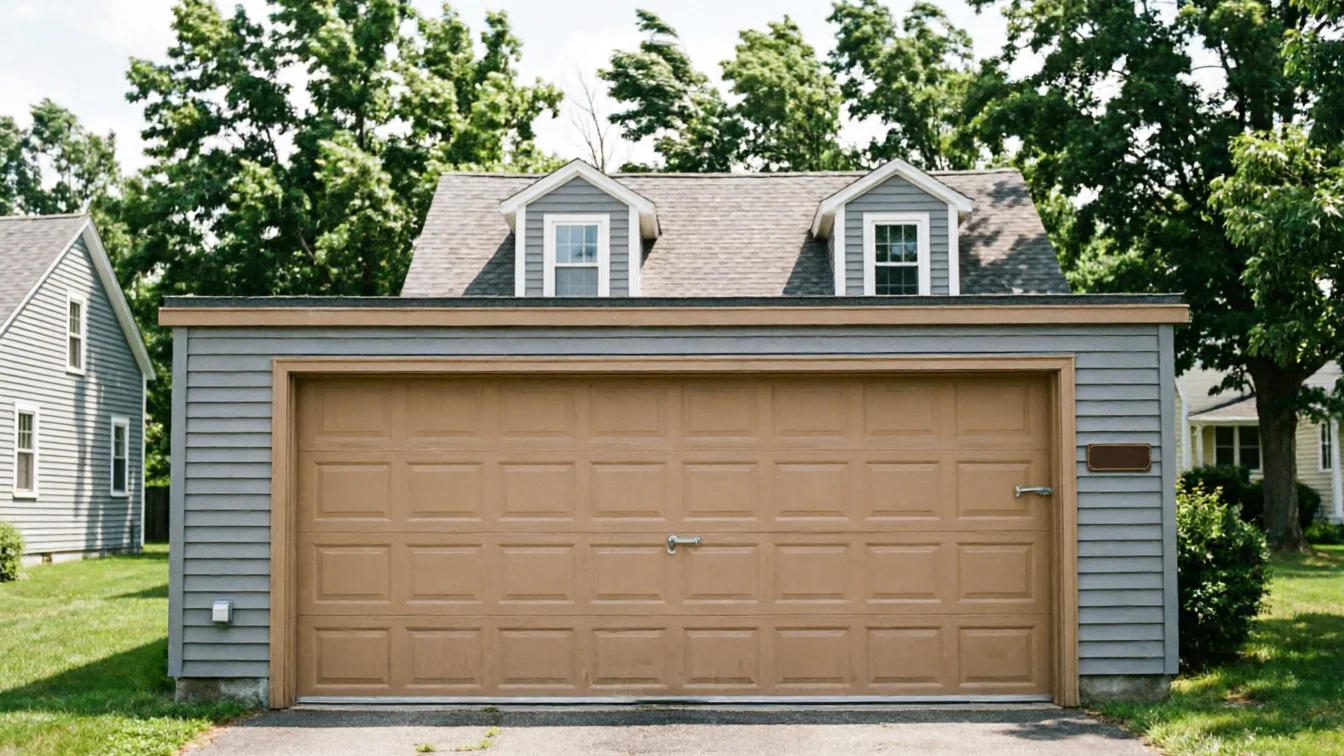
Most of the houses this company works on around Hartford went up between 1938 and 1986, with the bulk of that stock dating to the 1960s and 70s. That matters here because a double-wide door - the 16-foot kind that covers a two-car bay - was framed into a lot of those garages as a single opening, and the track and bracing hardware installed at the time wasn't built to today's wind-load standards. People assume a door problem is always a spring or opener issue. On a wide door, it's often the horizontal track brackets pulling loose from jamb lumber that's been there since the Nixon administration. The fix people reach for first - tightening a loose roller or adding a second spring - doesn't address why the door is racking in its tracks in the first place. A 16-foot door has twice the surface area of a single door catching the same gust, and the original end stiles and strut bracing on a 1960s-era panel were sized for a narrower, lighter standard. Swapping in a heavier modern opener without checking the track anchoring just moves the strain around instead of fixing it.
How Local Conditions Play In
Hartford sits in a cold severe climate band, which means the garage sees real freeze-thaw cycling every winter - wood jambs swell and shrink, track bolts back out a sixteenth of a turn at a time, and by February a bracket that was snug in October has play in it. On a single door that slack is annoying. On a wide door it's structural, because a 16-foot panel has more leverage working against every loose anchor point when wind pushes on it. This isn't a hurricane-coast problem; it's a slow one, built from a season of temperature swings loosening hardware that was already undersized for the opening by current standards. The houses in this service area that still have their original one-piece or early sectional doors from the 1960s-70s era are the ones most likely to be running on jamb brackets that have never been re-torqued since installation. If you're in one of the closer-in neighborhoods - Behind the Rocks, North Meadows, South End - where that older stock is common, this is worth a look before winter, not after a panel's already bowed.
The Situation
A wide door fails differently than a single door under wind pressure. Instead of one clean failure point, you get distributed stress: the top panel bows first because it has the least bracing, the center stile flexes, and the track brackets nearest the top of the opening take the worst of it. On a door with original 1960s-70s hardware, that bracket is often lag-bolted into jamb framing that's seen fifty-plus years of seasonal movement, and the wood around the bolt has compressed. We see this most on doors that have never had a wind-rated strut retrofit - the horizontal reinforcing bar that keeps a wide panel from bowing under lateral pressure. It's not something every door needs, but on an opening this size with hardware this old, it's the piece most likely to be missing. One limitation worth saying plainly: if the jamb framing itself has deteriorated, no amount of bracket upgrade fixes it - that's a carpentry repair before it's a garage door repair, and we'll tell you that rather than bolt new hardware to bad wood.
Checking It Yourself
Open the door and look at the top corners where the track meets the jamb. If you can see daylight between the bracket and the wood, or wiggle the bracket by hand, that's your first sign the anchoring has backed out - common on the original installs still found through this area's 1960s-70s housing. Next, stand back and look at the horizontal line of the top panel with the door closed. A door with a missing or failed strut will show a slight bow across the middle, more visible on a 16-foot door than a single because there's more unsupported width. Check the center stile too, where two sections of a wide door meet - any visible gap or flex there under hand pressure means the bracing isn't doing its job. None of this requires tools, just a flashlight and five minutes. If you find looseness at the brackets, that's a call-worthy issue before the next cold snap, not after.
Frequently asked questions
Why does my double-wide garage door shake more than my neighbor's single door?
A 16-foot door catches more wind than an 8-foot door and has more panel width unsupported between the side tracks. If your house dates to the 1960s or 70s, which a lot of this area does, the original bracing was sized to an older standard and may not include the horizontal strut that stiffens a wide panel against that extra load.
Is this a problem specific to older Hartford-area houses?
It's tied to when a house was built. Housing in this service area runs from 1938 to 1986, with most of it from the 1960s-70s, and doors from that era weren't engineered to current wind-load codes. Newer installs elsewhere with modern bracing don't have the same exposure.
Does winter make this worse?
Yes. Hartford sits in a cold severe climate band, meaning real freeze-thaw cycling every year. That cycling loosens jamb hardware gradually, so a bracket that was fine in fall can have play in it by late winter, right when wind loads on a wide door are also highest.
Can I just add a second spring to fix the shaking?
No. A spring manages the weight of the door moving up and down; it doesn't do anything for lateral wind pressure pushing against a wide panel. If the track brackets or center stile are loose, a new spring won't touch the actual problem.
Related garage door services in Hartford
More garage door guides
Book garage door service in Hartford
Call now or request a quote - tell us what the door is doing and where you are.