
Hartford, CT · Garage Door Service
Garage Door Maintenance for Hartford Homes
Garage door maintenance in Hartford, CT for homes built mostly 1938-1986, in a cold climate that hardens grease, rusts cables, and stiffens springs over time.
- Repairs & new doors
- Springs & openers
- Serving 6 nearby communities
How Long You Are Without the Door
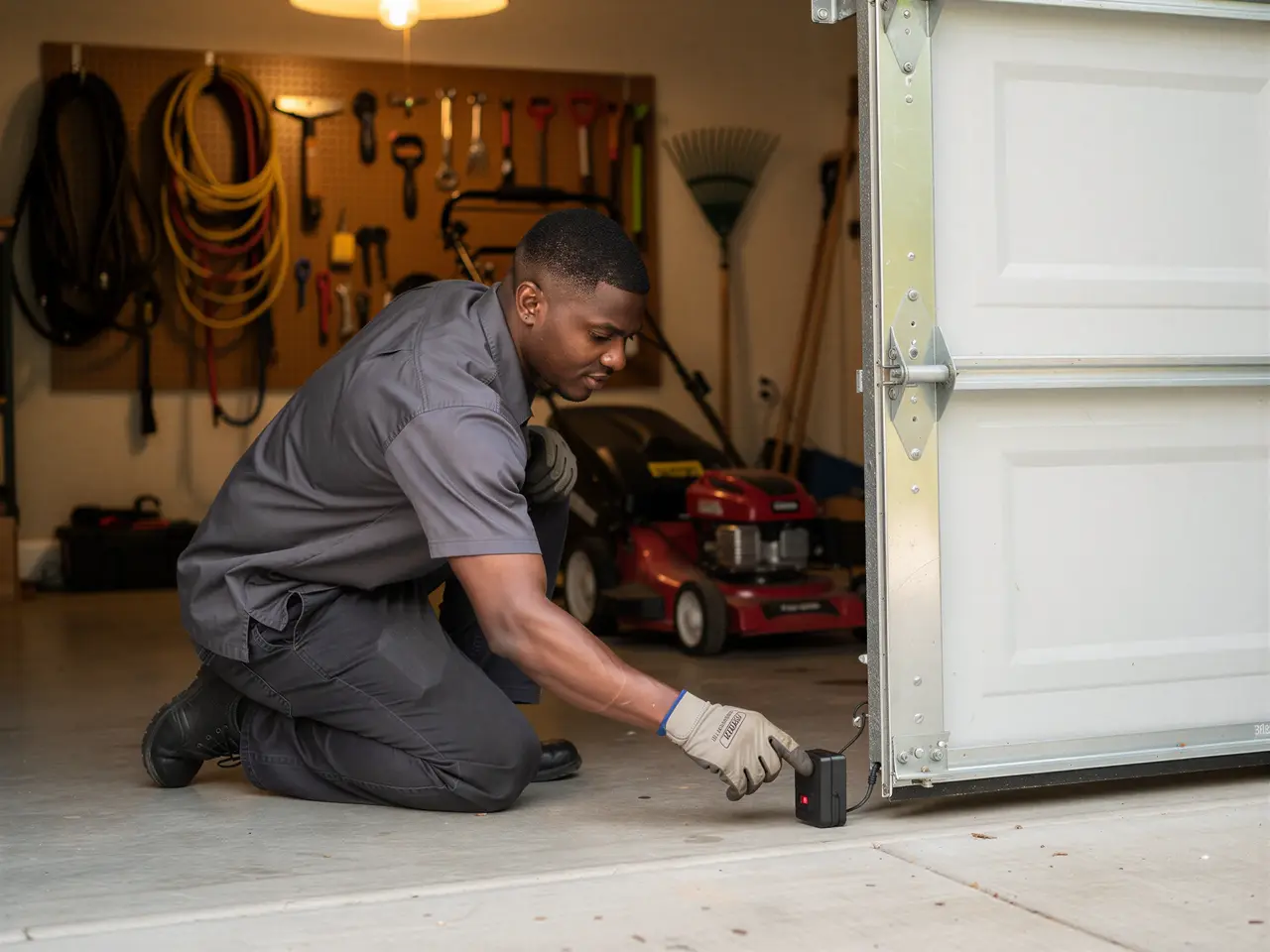
A maintenance visit isn't a repair call, so the door stays usable the whole time in most cases. We work the opener, track, rollers, cables, and spring while the door is still operational between checks, and we only pull it out of service if something we find during the visit - a frayed cable, a cracked roller, a spring close to its wear limit - needs to come off the hardware right then. That's rare on a door that's been maintained on a normal schedule.
Because this service area runs out from Hartford to towns like West Hartford, East Hartford, and Wethersfield at four miles, Newington and Glastonbury Center at six, and out past Windsor, Farmington, and Avon toward nine and ten miles, scheduling a maintenance visit usually means picking a slot that fits your week rather than waiting on an emergency truck. Maintenance is planned work, not a same-day scramble. If you're calling because the door is already stuck down, that's a repair call, not a maintenance one, and we'll tell you which you actually need before we show up.
Can You Do This Yourself
Some of it, yes. You can visually check your tracks for dents, listen for grinding in the opener, wipe down the rollers, and apply the right lubricant to the hinges and rollers - not the track itself, which should stay dry. You can also test the auto-reverse safety feature by setting a 2x4 flat under the door and watching whether it reverses on contact.
What you shouldn't touch is the torsion spring system. A wound torsion spring holds enough stored energy to break bones or worse if it lets go while you're working near it, and on the older torsion setups still common on houses from this area's 1960s-70s building wave, the hardware isn't always the type sold at a hardware store. We won't talk you out of the lubrication and visual checks - those are worth doing every few months - but spring tension, cable replacement, and anything inside the opener's gearing is where we draw the line for a homeowner working alone.
Why It Happens Here
Housing in this service area was mostly built between 1938 and 1986, with the median landing around 1972 and most of the stock concentrated in the 1960s and 70s across the 67 named communities that make up the region. A door and opener installed or last replaced during that build wave is now carrying decades of cycles on hardware that was never designed to be maintenance-free forever - springs lose tension gradually, cable strands fray where they wrap the drum, and rollers wear oval instead of round.
The climate does the rest. This area sits in a federally classified severe cold band, and cold steel behaves differently than warm steel. Lubricant that was fine in August turns thick and sluggish by January, torsion springs lose a measurable amount of lifting power as temperatures drop, and metal track can contract just enough to throw a door slightly out of alignment that it wasn't out of in July. None of that is a defect - it's what happens to 50-year-old hardware in a climate that swings hard between seasons. Regular maintenance is what catches the small version of that problem before it becomes the version where the door won't move at all.
How It Shows Up
The first sign is usually noise: a grind or a pop from the opener, a squeal from a roller, a thud when the door hits the floor instead of settling. Next comes uneven movement - one side of the door riding slightly ahead of the other, which on an older torsion system usually means the spring on one side has lost tension relative to the other. Openers start working harder, too, pulling more current and running hotter to move a door that's gotten heavier to lift as the hardware ages.
In this climate, a lot of that shows up first on the coldest mornings of the year, when stiff grease and contracted metal make an already-worn part struggle in a way it didn't the week before. A door that closed fine every day in October can start sticking a few inches off the floor by January. That's not usually the opener failing - it's the spring and track system telling you it was already close to the edge, and the cold just found it first.
Frequently asked questions
How often should I get my garage door maintained in Hartford?
There's no single number in the data we work from, but given how this area's housing stock dates mostly to the 1960s and 70s and runs through a severe cold winter every year, most owners are better off checking lubrication, cables, and spring tension before winter sets in rather than waiting for a cold-morning failure.
Will maintenance stop my spring from ever breaking?
No. Maintenance extends the useful life of a spring and catches it when it's close to failing, but every torsion spring has a rated number of cycles and will eventually wear out. What maintenance does is move that failure from a surprise to something we can usually see coming and schedule around.
Do you service towns outside Hartford itself?
Yes, this service area runs out to towns including West Hartford, East Hartford, Wethersfield, Newington, Windsor, Farmington, and others within roughly a ten to twelve mile radius of Hartford, each with their own page covering local detail.
Related services
By Neighborhood
Maintenance across the Hartford area
We also handle maintenance in these Hartford-area suburbs.
Book garage door service in Hartford
Call now or request a quote - tell us what the door is doing and where you are.