
Hartford, CT · Garage Door Service
Garage Door Panel Replacement for Hartford Homes
Dented or cracked garage door panel in Hartford? See why pre-1986 housing stock and Connecticut winters make single-panel damage common, and what replacement involves.
- Repairs & new doors
- Springs & openers
- Serving 6 nearby communities
How Long You Are Without the Door
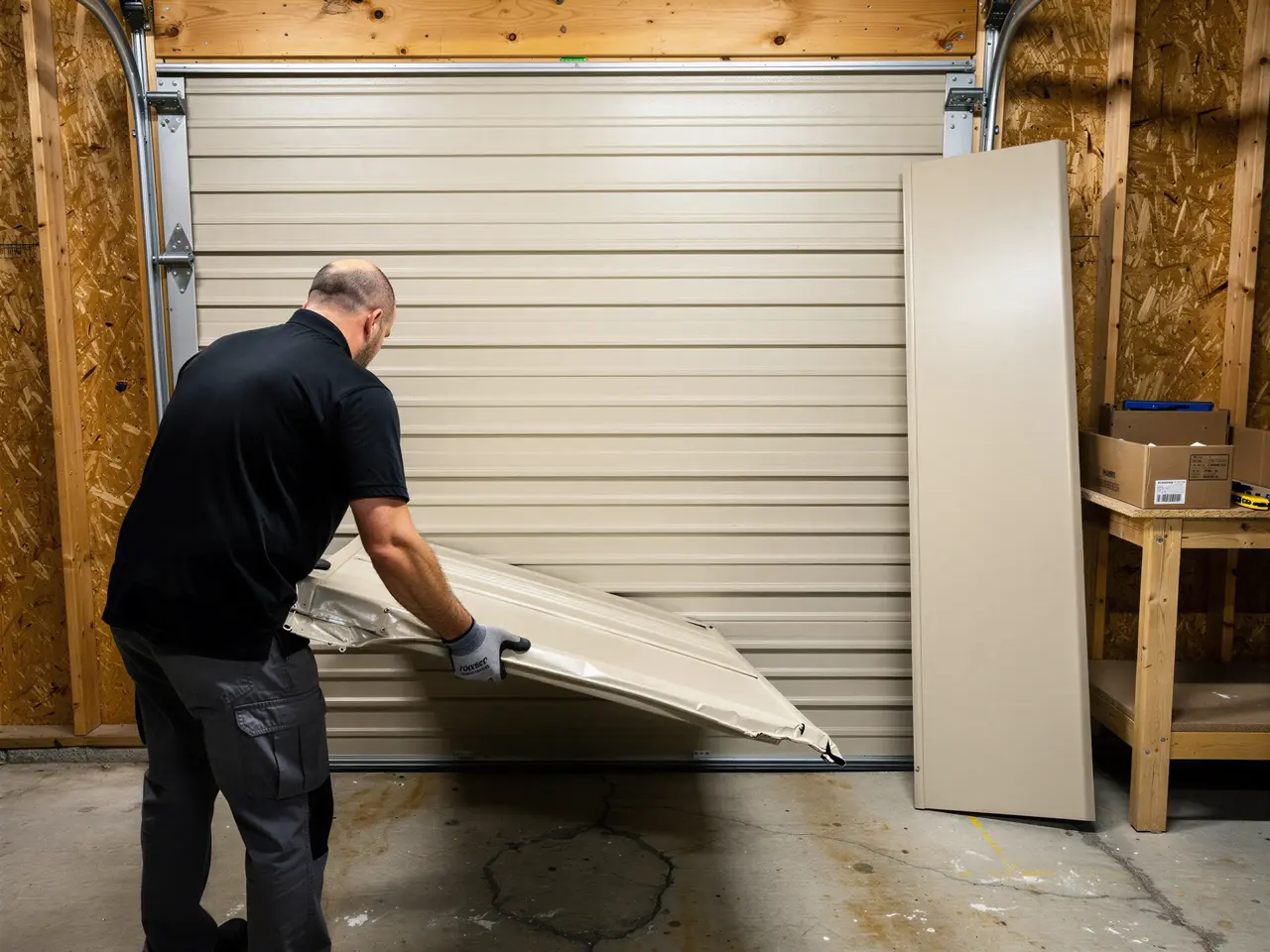
A single damaged panel doesn't usually mean the door is stuck shut, but it does mean the door is out of square until it's fixed. Most sectional doors are built from matched panels, and a dented or cracked one throws off the track alignment just enough that the opener senses resistance and reverses, or the door binds partway through its cycle. On the steel doors common across Hartford's housing stock, a single replacement panel can often be ordered and swapped without touching the rest of the door, since sections are sold individually by most manufacturers still supporting that door line. The harder cases are houses with doors from the 1960s-70s era common here, where the original panel profile is no longer made and the whole door needs matching color and ribbing that the manufacturer may have discontinued. In that situation, a homeowner is choosing between a mismatched patch panel and a full door replacement, which is a different job and a different conversation than panel swap-in. Either way, the door stays operable at reduced function until the new panel is in - it just won't look right, and the track alignment should be checked before it's used daily again.
Can You Do This Yourself
Ordering a replacement panel and bolting it in place is within reach for a handy homeowner if the door is a common size and the manufacturer still stocks that panel profile. The part that trips people up is alignment: panels carry the hinge brackets and roller stems, and if those go back in slightly off, the whole door tracks crooked and strains the opener on every cycle after. On older doors - the kind common in homes built in Hartford's 1938-1986 era - panel dimensions and hinge spacing don't always match current stock sizes, so a part ordered off a model number sometimes doesn't fit the actual door in front of you. That's the honest limitation here: we don't force a panel that's close enough. If the match isn't right, the better call is replacing the section with a correctly sized one or discussing a full door, rather than shimming a mismatched part into place. If your door still has the original torsion spring and hardware from that era, leave the spring alone - that's a separate, higher-risk job and not part of a panel swap.
Why It Happens Here
Hartford's housing stock skews old - most of it put up between 1938 and 1986, with the bulk from the 1960s and 70s. Garage doors from that period are steel sections without the foam-core insulation and reinforced skins used in doors made today, so a stray hit from a car bumper, a dropped bike, or a wind-driven branch dents the panel instead of flexing back. Add in the climate: this area sits in a cold-severe band, meaning repeated freeze-thaw cycles each winter. Steel panels contract in deep cold, and a dent that was cosmetic in October can turn into a crack by February as the metal flexes against itself at the fold lines. Older single-skin panels are more brittle at low temperatures than the double-skin, insulated panels sold now, which is part of why panel damage on a 1960s or 70s-era door shows up as a split rather than just a dent. None of this is unique to one block or one neighborhood - it's a function of when the housing went up and what the winters do to steel that's been in service for decades.
How It Shows Up
The most common call is a bottom panel with a crease or a puncture from a car backing out too far before the door's fully open - bottom panels take the brunt because they're at bumper height. Next most common is a cracked panel near a hinge point after a hard winter, where repeated cold flex finally splits metal that was already dented or weakened. Garage doors with window inserts show a third pattern: the window frame cracks the surrounding panel steel around it, usually after years of minor settling in the door's track. On older doors without foam-core backing, you'll sometimes see a panel that's visibly bowed rather than dented - the thin steel skin has no insulation layer to hold its shape, so impact spreads out across the whole section instead of staying local. Any of these is a panel swap, not a full-door job, as long as the replacement section is still available for that door's make and age.
Frequently asked questions
Can you replace just one panel instead of the whole door?
Usually yes, if the manufacturer still makes that panel profile and the door isn't too old for current stock sizing. Doors from the 1960s-70s era common in this area sometimes have hinge spacing or dimensions that don't match what's sold today, which is when a full door swap becomes the more practical option.
Why did my panel crack instead of just dent?
Cold makes steel more brittle. In a cold-severe climate like this one, a dent that happens in warm weather can flex and split along the fold line once temperatures drop, especially on older single-skin panels without a foam-core backing to hold their shape.
Will a new panel match the rest of my door?
If the door is still in production, yes - panels are sold to match. On older doors, color and rib pattern from original manufacturing runs are sometimes no longer made, so an exact match isn't guaranteed and we'll tell you that before ordering anything.
Related services
By Neighborhood
Panel Replacement across the Hartford area
We also handle panel replacement in these Hartford-area suburbs.
Book garage door service in Hartford
Call now or request a quote - tell us what the door is doing and where you are.