
Hartford, CT · Garage Door Service
Garage Door Opener Repair for East Hartford's 1960s Housing Stock
Openers on East Hartford's 1961-era homes see steady cold-weather strain. We repair chain and belt drives, sensors, and circuit boards, traveling the 4 miles from Hartford.
- Repairs & new doors
- Springs & openers
- Serving 6 nearby communities
How Long You Are Without the Door
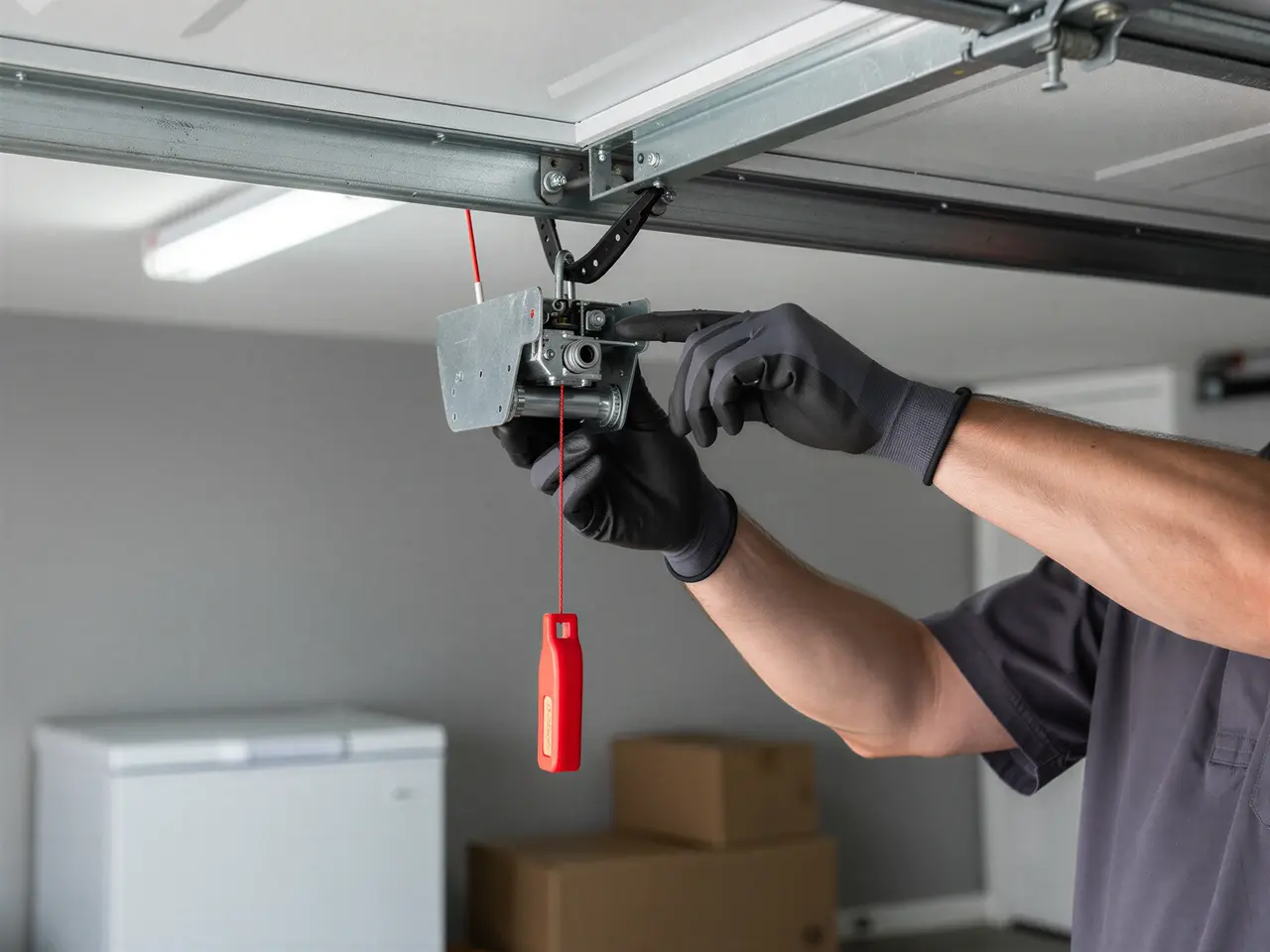
Most garages in East Hartford went up around 1961, and the doors on them are usually single steel panels or older wood-composite slabs sized for the narrower bays builders used then - often a single 9-foot opening rather than today's double-wide. The opener hung on that door is frequently a second or third unit, retrofitted sometime after the original chain-drive setup wore out. When it fails, you're not stuck for days. We work out of Hartford, about 4 miles away, and most opener calls in this town get a tech out and the unit diagnosed the same visit - a worn drive gear, a dead capacitor, a logic board that's stopped talking to the wall button. The full page on garage door work in this town, covering doors as well as openers, has more on the doors themselves. This page stays on the opener.
Stocked Parts
We carry the drive gears, sprockets, and belt sections that fail most often on chain and belt openers from the last few decades, along with limit switches, safety sensor pairs, and standard logic boards. What we don't keep on hand is anything for a proprietary opener model discontinued more than a decade back - those boards sometimes have to be special-ordered, and if the manufacturer's stopped making them at all, replacement of the whole unit is the honest answer instead of a repair quote. On a budget like East Hartford's, where median household income runs lower than the wider service area's $107,494, that distinction matters: we'll tell you straight when a $40 part fixes it and when you're better off not chasing parts for a unit that's done.
Why It Happens Here
This region sits in a cold climate band with hard winters, and openers take that worse than doors do. Chain-drive units lose lubrication and the chain stiffens in the cold, putting extra load on the drive gear every single cycle. Belt-drive units get brittle belts that can slip teeth after a deep freeze. In a town where the housing stock dates to around 1961, a lot of these openers are themselves 15 to 25 years old, meaning the gear is plastic (by original design, to protect the motor) and plastic gears are exactly what cold-weather strain chews through first. That combination - older housing stock, older openers, a real winter - is why opener calls here cluster hard from late fall through February.
Where This Job Goes Sideways
The common mistake is treating a noisy opener as a motor problem when it's almost always the gear or the chain tension. People replace the whole unit when a $25 gear kit would've done it, or they keep running a stripped gear until the chain jumps the sprocket and jams the door half open - now it's an emergency instead of a scheduled repair. The other failure mode: safety sensors knocked out of alignment, often by someone bumping a parked bike or a trash can into them, which makes the door refuse to close at all and gets mistaken for a dead opener entirely.
Can You Do This Yourself
Realigning a safety sensor or swapping the remote's battery is fine to try yourself - it's five minutes and no tools. Replacing a drive gear means taking the cover off a spring-loaded rail assembly, and if you don't know which bolts carry tension, you can get a chain or belt snapping back at you. Circuit board swaps need the travel and force limits reset afterward or the door will either stall partway or slam down too hard, which is a real risk to anyone underneath it. If you're not confident reading a wiring diagram, this is one to hand off.
How It Shows Up
The door reverses right after it starts closing, or it opens maybe a foot and stops. The motor hums but nothing moves - that's usually a stripped gear, not a dead motor. The remote works some days and not others, which often means a board losing contact in the cold rather than a battery problem. Or the opener runs the full cycle but makes a grinding noise it didn't make last winter. Any of these, in a house built around the early '60s running an opener that's outlasted its expected life, is worth a look before the chain jumps or the gear goes to dust. See our main page for opener repair across the Hartford area for what we cover beyond this town.
Frequently asked questions
Do you carry parts for older openers common in East Hartford homes?
We stock drive gears, sprockets, belts, limit switches, and sensor pairs for most chain and belt openers from the last couple decades, which covers a lot of what's installed in this town's 1960s-era housing. Older proprietary boards sometimes need a special order, and if a model's fully discontinued, replacement is usually the better call than chasing parts.
How far is East Hartford from your Hartford location?
About 4 miles. We travel out from Hartford for opener calls in East Hartford; there's no separate branch here, just a short drive for the tech.
Why does my opener act up more in winter?
Cold stiffens chain lubrication and makes belt material brittle, and this area sits in a severe cold climate band. Older plastic drive gears, common in openers installed decades ago, take the extra strain hardest and are usually the first thing to fail once temperatures drop.
Is it worth repairing an opener from the 1990s or should I replace it?
Depends what's broken. A gear kit or sensor realignment is cheap and worth doing on an old unit. A dead board on a discontinued model usually isn't - by the time you track down the part, you've spent close to what a new opener costs, with none of the warranty.
More garage door services in East Hartford
Book garage door service in Hartford
Call now or request a quote - tell us what the door is doing and where you are.