
Hartford, CT · Garage Door Service
New Garage Door Installation for East Hartford Homes
East Hartford's housing mostly went up around 1961, a decade ahead of the service area's 1972 median. That gap changes what a new door install actually involves here.
- Repairs & new doors
- Springs & openers
- Serving 6 nearby communities
How Long You Are Without the Door
East Hartford's housing stock centers on 1961, which puts a lot of these garages about a decade older than the 1972 median across the wider Hartford service area. That matters for an install because older framing often means the opening itself needs attention before a new door goes in - trimming a jamb that's shifted, adding blocking where there wasn't any, or dealing with a header that was never sized for a modern insulated door. None of that is unusual, but it's extra time on site beyond just hanging panels and running track. We come from Hartford, about 4 miles out, so travel isn't the bottleneck - the condition of a 60-year-old opening is. If your garage was part of the original build rather than a later addition, plan on the job running longer than a straight swap-out would, because the carpentry has to come first.
Stocked Parts
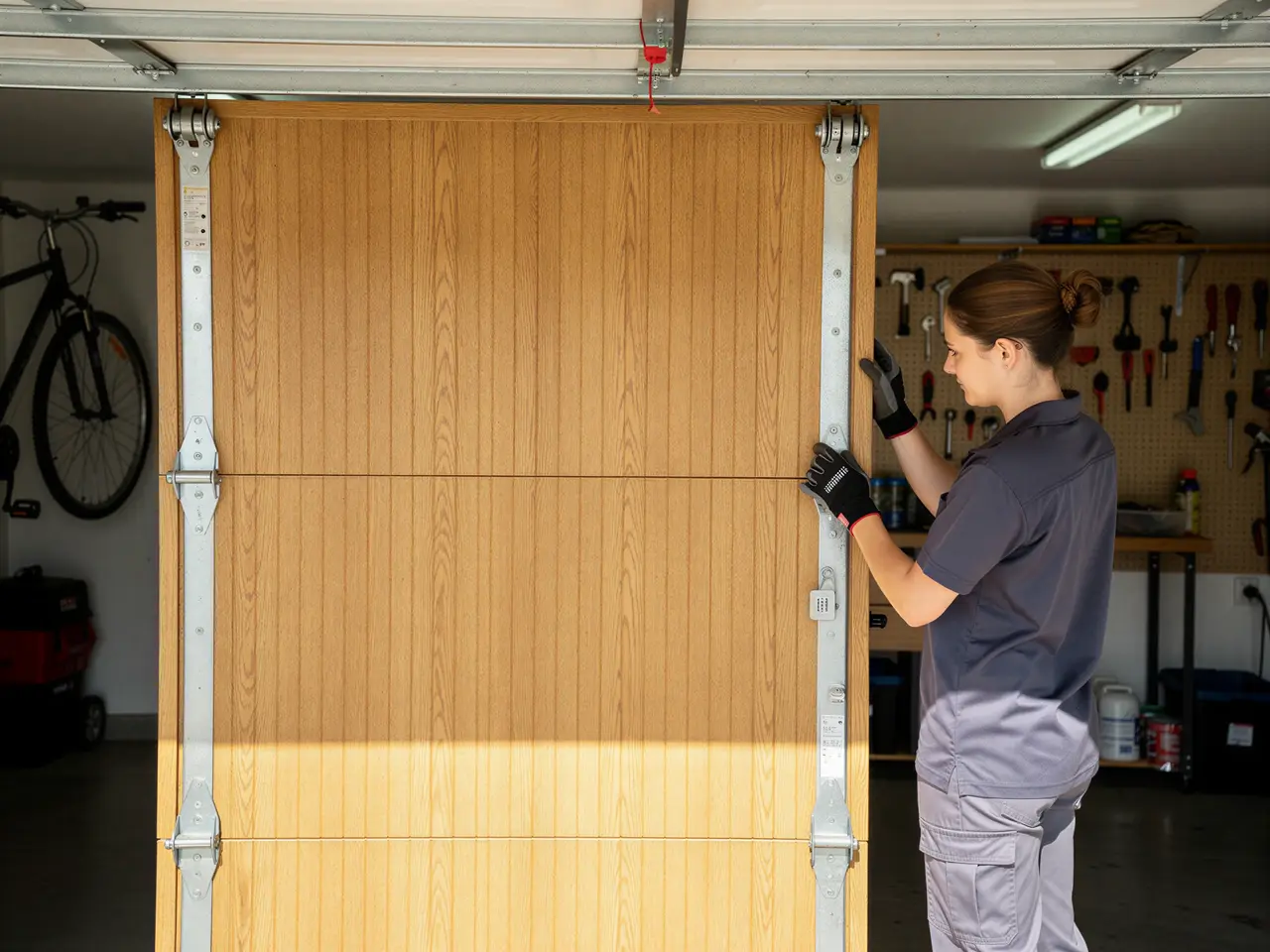
A new install is mostly a known quantity: torsion springs sized to the door weight, standard-lift track, and an opener rated for the climate band this region sits in - cold and severe enough that winter affects how springs and cables perform. What we carry on the truck covers the common widths and standard track configurations. What we don't stock is anything custom - non-standard openings, odd headroom, or a door width outside the usual single and double sizes. If your garage falls outside standard dimensions, that part gets special-ordered, and that's a lead time question we answer once we've measured, not before.
Why It Happens Here
With a median build year of 1961, a good share of East Hartford's garages were framed for the doors of that era - lighter, single-layer, often without the insulation or the spring sizing a modern door assumes. When a homeowner here decides to replace rather than keep patching an old door, it's frequently because the original opener and track were never built for what's being asked of them now: heavier insulated sections, quieter operation, or just an opener old enough that parts aren't being made anymore. The 1961 figure isn't a stray detail - it's most of the reason these jobs lean toward full replacement over simple repair once the door starts failing.
Where This Job Goes Sideways
The spot where an install goes wrong is almost always the opening, not the door itself. On a house from the early 1960s, the rough opening can be out of square by more than new doors tolerate, and the existing track mounts may be set for a different spring system than what's going in. Skip the check and you end up with a door that binds on one side or an opener straining against a track it was never aligned with. We measure the opening before quoting, not after delivery, specifically because this area's housing age makes an unmeasured guess a bad bet.
Can You Do This Yourself
Hanging a prehung single door with help and the right tools isn't impossible for a handy homeowner. Setting torsion spring tension on an opening that's a few decades old and possibly out of true is a different kind of job - the spring is under enough force to cause real injury if it's wound wrong, and on an older opening you're also guessing at alignment without a reference point. If your garage is one of the many here built around 1961, the honest answer is that the carpentry and the spring work are where this stops being a weekend project.
How It Shows Up
The first sign is usually an opener that runs louder or slower than it used to, or a door that doesn't sit flush when it's down - both common on a track and spring setup that's been carrying an older, heavier single-layer door for years. On houses from the 1961 era specifically, we also see openings where the door was replaced once already but the track and spring sizing never got updated to match, which shortens the life of whatever gets installed next. Catching that mismatch before a new install goes in saves a callback a year later.
Frequently asked questions
Why would my opening need work before a new door goes in if the old door worked fine?
A door can run for years slightly out of alignment before it fails outright. On East Hartford's older openings - many framed around 1961 - the jamb or header sometimes shifted just enough that a new, properly fitted door shows problems the old warped one masked. We check square and plumb before quoting so it doesn't surprise you mid-install.
Do you keep a truck stocked near East Hartford?
No - we run out of Hartford, about 4 miles away, and bring what the job needs with us. There's no separate depot in East Hartford itself, so any custom part gets ordered in advance once we've measured your opening.
Will a new door fit my old opening without carpentry changes?
Often yes, especially on standard single and double openings. But on houses from the early 1960s we sometimes find framing that's moved over time or was never sized for modern door weight. We won't know until we measure, and we'd rather tell you that upfront than quote a number that changes on install day.
More garage door services in East Hartford
Book garage door service in Hartford
Call now or request a quote - tell us what the door is doing and where you are.