
Hartford, CT · Garage Door Service
The First Things We Look At on a Hartford Service Call
A look at what we check first on a Hartford garage door call, tied to this city's 1938-1986 housing stock and the cold-climate wear it puts on springs and track.
- Repairs & new doors
- Springs & openers
- Serving 6 nearby communities
Where People Go Wrong
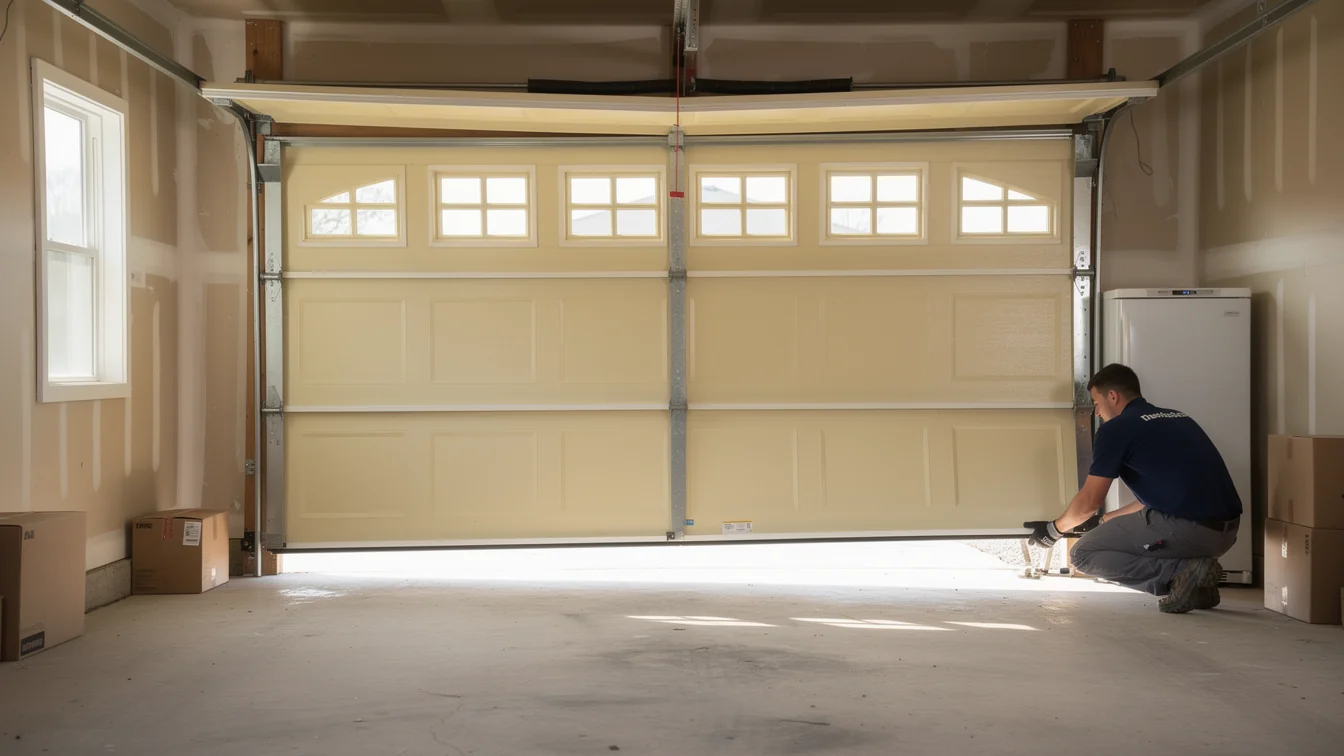
Most homeowners here start troubleshooting at the opener, because that's the part with a light and a remote. But across Hartford's housing, built mostly between 1938 and 1986 with a median year around 1972, the opener is rarely the first thing to fail. A door hung in that era usually runs on a torsion spring system that's been replaced once, maybe twice, since the house was built - and the hardware around it (end bearings, cable drums, the stationary cone) ages at a different rate than the spring itself. People swap the opener logic board, spend money, and the door still binds halfway up because the real problem is a worn bearing plate or a track that's racked out of square from decades of seasonal movement. We check the mechanical chain - spring, cable, drum, roller, track - before we ever touch the opener unit. On a house from this period, that's where the wear actually lives. It's also where a misdiagnosis costs the most, since opener parts get ordered and don't fix anything.
How Local Conditions Play In
Hartford sits in a severe cold climate band, and that matters more for a garage door than most people expect. Steel torsion springs lose temper strength as they cycle through repeated freeze-thaw swings, and a spring sized correctly for a mild summer day can come up short on a 10-degree morning when the lift load is heaviest. Lubricant on rollers and hinges thickens in cold, which raises the strain on the opener's gear set every single cycle. On the older end of the local stock - doors and hardware dating closer to the 1938-1972 range - we also see steel track that was never galvanized to current standards, and that corrodes faster under repeated winter salt and moisture tracked in off the driveway. None of this is dramatic on any one call. It shows up as a slow accumulation: a spring that's been wound to a slightly incorrect cycle count for its age, a track bracket with surface rust nobody noticed, a roller that's gone from quiet to gritty over two winters. We check wear against the season, not just against the part.
The Situation
The mix of housing ages across this service area means no two calls start from the same baseline. A house in Downtown or the South End is more likely to carry original or early-replacement hardware from the earlier end of the 1938-1986 range. A house out toward North Meadows or the newer pockets closer to Windsor and South Windsor is more likely sitting on 1970s-80s stock, which usually means a different spring wind and a different track gauge than what a 1940s door used. We ask where the house falls in that span before we open the panel, because it changes what we expect to find. Income and household data for the area (median household income around $107,000, with roughly 192,000 owner-occupied houses across the broader region) tell us people here tend to maintain rather than defer - which is consistent with what we see: more worn hardware than outright neglect. One honest limit - if a door's track and spring system is original to a house built before the 1950s, parts for that exact drum or bearing size are sometimes no longer made, and replacement of the full assembly is the realistic path, not a patch repair.
Checking It Yourself
Before calling, there are a few things worth a look. Stand the door at half-travel by hand (opener disconnected) and see if it holds position - if it drops or shoots up, the spring tension is off, and that's not a DIY fix given the cable tension involved. Run a hand along the track for rust bloom or pitting, especially near the bottom rollers, which is more common on the colder, older end of the local housing stock than people expect. Listen for a grinding or popping sound on the first cycle of the day in winter - that's often cold-stiffened lubricant working against a gear, not a failing motor. Check that the bottom brackets and hinges aren't visibly loose; on a house pushing fifty years old, that hardware has usually been tightened once or never. If the door is quiet, level, and holds at mid-travel by hand, you're probably looking at routine lubrication rather than a repair call. If it doesn't hold, don't force it - that's the one check where guessing wrong can hurt someone.
Frequently asked questions
Why does my garage door feel harder to lift in winter?
Cold thickens the lubricant on rollers and hinges and steel springs lose some flexibility as temperatures drop, so the opener works harder for the same lift. In a severe cold climate like Hartford's, that seasonal swing is normal, but a door that's suddenly much harder to lift by hand (opener disconnected) usually means the spring tension itself has weakened, not just the grease.
My house was built in the 1960s - does that matter for repairs?
It can. Houses from that part of Hartford's 1938-1986 housing range often still run spring and track hardware sized to older standards, which isn't always a direct match for current stock parts. We check the existing hardware dimensions before ordering anything, rather than assuming a modern part will drop in.
Is it ever not worth repairing an old door?
Yes. If the track and spring assembly is original to a house from the earlier end of the local housing stock and the exact drum or bearing size isn't made anymore, patching it piece by piece usually costs more over time than replacing the full assembly once.
Related garage door services in Hartford
More garage door guides
Book garage door service in Hartford
Call now or request a quote - tell us what the door is doing and where you are.