
Hartford, CT · Garage Door Service
What We Actually Check on a Hartford Service Call
A look at what a real service call checks on Hartford's 1938-1986 housing stock, from cold-weather spring tension to the hardware this era actually used.
- Repairs & new doors
- Springs & openers
- Serving 6 nearby communities
Where People Go Wrong
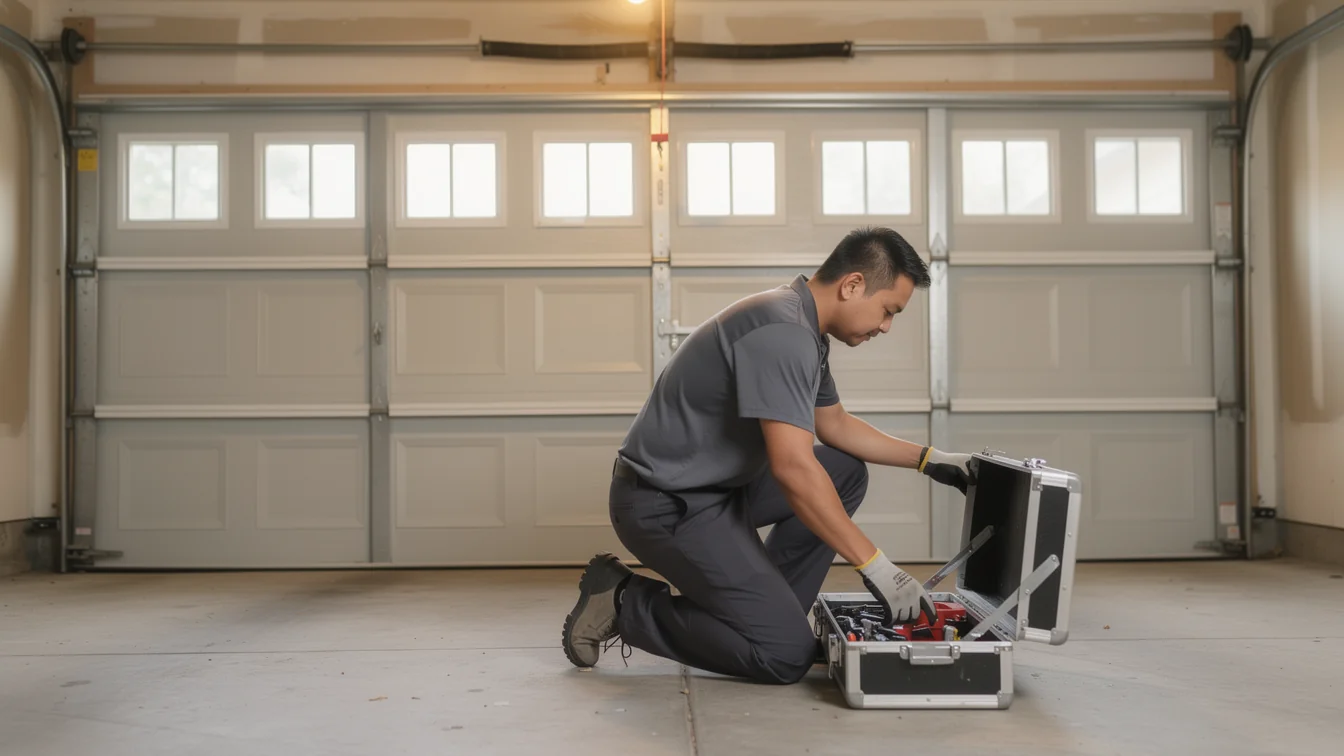
The most common mistake we see in Hartford is treating a service call like a part swap. Someone hears a grinding noise, assumes it's the opener, and wants a new motor installed before anyone's looked at the track. But most of the houses in neighborhoods like Behind the Rocks, North Meadows, and South End were built between 1938 and 1986, with a lot of that stock going up in the 1960s and 70s. That means original or near-original track alignment, older jamb framing, and in some cases hardware sized for doors that have since been replaced with a heavier model on the same old rails. A call that starts as "the opener's dying" often ends with us finding a bent track or a spring that's been overworking the opener for years, not a motor problem at all. We won't sell you an opener if the real issue is a $40 roller or a track that needs re-squaring. That's the honest limitation here: sometimes the fix is cheap and boring, and it's still the right fix.
How Local Conditions Play In
Hartford sits in a cold, severe winter climate band, and that changes what a service call has to check compared to a mild-climate town. Torsion springs lose tension as steel contracts in sustained cold, so a spring that felt balanced in October can feel heavy by January. We check cycle count and winding on every call during cold months, not just when someone complains. Cold also stiffens nylon rollers and hardens old lubricant into a gum that slows the door and strains the opener's drive gear. On a house built in the 1960s or 70s, the weatherstripping at the bottom panel is usually original-spec rubber, not the UV- and cold-rated vinyl used now, so it cracks and lets wind drive snow under the door. None of this is dramatic, but it adds up over a Hartford winter in ways it wouldn't in a warmer climate. We check the bottom seal, the spring tension, and roller condition as a set, because in this cold they tend to fail together.
The Situation
Across the service area there are roughly 386,561 households and about 192,067 owner-occupied houses, with a median household income of $107,494. That matters for one practical reason: a lot of homeowners here are weighing a repair against a full door replacement on a door that's older than they are. On a house from the 1972 median build year, we're often looking at a door and track system that's been serviced piecemeal for decades, panel dents here, a spring replaced there, nothing original left but the frame. A service call in this situation means checking the whole system: track plumb, spring balance, cable fray, panel condition, and opener force settings, and giving you a straight read on whether another patch repair is worth it or whether the door's reached the point where replacement saves money over the next five years. We don't push replacement to pad the invoice. If a $200 repair gets you three more good years, we'll say so.
Checking It Yourself
Before you call, there are a few things worth looking at yourself. Pull the manual release and lift the door by hand; if it's hard to lift or doesn't hold halfway open, the spring is off balance, and that's a call, not a DIY fix. Look at the bottom panel seal for cracking or gaps, especially if your house dates to the common 1960s-70s building stock in this area; a brittle seal lets cold air and snowmelt in. Listen for grinding versus popping, grinding usually points to rollers or track, popping more often points to the spring or hardware. Check that the opener's auto-reverse still works by setting a block of wood under the door and running it down. If you've got visible rust on cables or a spring coil that looks stretched unevenly, don't test it further by hand. That's a tensioned-steel part and it can let go without warning.
Frequently asked questions
Does cold weather actually affect my garage door spring in Hartford?
Yes. Steel springs lose some tension as they get cold, and Hartford's winter climate band is classified cold and severe. A door that was balanced in fall can feel noticeably heavier by midwinter. If you're forcing the opener to lift a door that no longer holds halfway by hand, the spring needs attention before the opener burns out.
My house is from the 1960s, is the garage door hardware still original?
It can be. A lot of Hartford-area housing dates to the 1938-1986 range, with the bulk from the 1960s and 70s. We regularly find original track and jamb hardware paired with a replacement door that's heavier than what the hardware was built for. A service call checks whether the two still match up safely.
Is it ever not worth repairing an older door?
Sometimes, yes. If the door and track have been patched over years and the frame itself is worn, another repair might only buy a short stretch of time. We'll tell you straight if replacement makes more financial sense than another fix, rather than defaulting to either option automatically.
Related garage door services in Hartford
More garage door guides
Book garage door service in Hartford
Call now or request a quote - tell us what the door is doing and where you are.